Closing or consolidating? We take the room in one transaction.
We buy the contents of a closing facility in full, for cash, and schedule the removal against your lease date. One counterparty for the equipment, so your team can spend its attention on the parts of a shutdown nobody else can do.
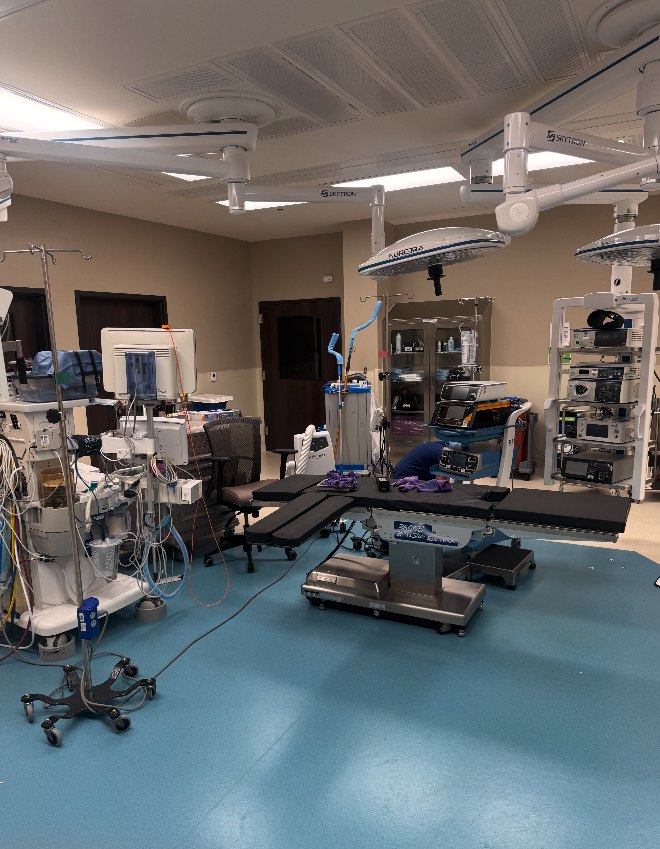
Equipment is rarely the hard part of a closing. It is just the loudest.
Staff, patient records, payer notifications, and the accreditation and licensure wind-down all have to be done by people who know your facility. The equipment does not. It is the piece of a closing that can be handed to someone else in full, and handing it off early is what buys back the calendar for everything that cannot be delegated.
How a closing buyout runs
Send the room
An asset list, a walkthrough, or photos of each room. We work from whatever you have; model and serial numbers only make it faster.
One number for the lot
We value each piece and give you a single cash figure for the facility, with the per-item reasoning behind it.
We work to your date
Lease expiration, closing date, landlord deadline. Tell us the date when you send the list and we work backward from it.
We handle removal
Deinstall, rigging, crating, and freight coordinated by us. Your team is not managing removal vendors during a closure.
One buyer beats eight listings during a wind-down
No piecemeal sale
Selling a closure item by item means eight negotiations, eight pickups, and the unsold remainder still sitting in the room on your last day.
We take the hard-to-place items
Non-working units, older generations, and odd modalities still carry parts and refurbishment value. Leave nothing off the list.
Cash, not consignment
You know the amount before anything leaves the building, and you are not waiting on someone else to find a buyer.
What a whole-facility buyout covers
The clinical equipment
C-arms, towers, microscopes, anesthesia machines, tables, booms, lights, sterilizers. The pieces with the most value and the most weight.
The rooms around the ORs
Pre-op and PACU beds, stretchers, monitors, warming cabinets, casework that is not fixed to the building.
Sterile processing
Washers, autoclaves, ultrasonic units, carts, and the instrument sets, which are frequently the largest overlooked line on a closing inventory.
The long tail
Furniture, IT, waiting room, storage room. The category where most of the delay comes from, because nobody wants to own the decision on it.
Anything under an active lease or security agreement sits outside the purchase and has to be returned through the lender or lessor. Identifying those pieces early is the single most useful thing an administrator can do in the first week.
Four things that decide whether a closing lands on schedule
Work backward from the lease, not forward from today
Almost every closing is governed by one date: when the space has to be empty and in the condition the lease requires. Removal, freight scheduling, and any repairs to the floor or walls all sit inside that window. Set the date first and the rest becomes arithmetic.
Inventory before you negotiate anything
A list, even a rough one, is what turns a closing from an open question into a transaction. It does not need serial numbers to be useful. Without it, every conversation stays hypothetical and the calendar keeps moving.
Decide the leased and financed pieces early
Equipment under a lease or a security agreement cannot be sold with the rest, and finding that out late is what pushes closings past their date. Pull the schedules while you still have time to act on them.
Keep the last cases and the removal apart
Nothing comes out until the final case is done. Build the gap in deliberately rather than discovering it.
Common questions
Do you take the whole facility, or only the valuable pieces?
The whole facility. Cherry-picking the three best items and leaving you with the rest is the outcome a closing is trying to avoid, so we take the contents in full.
What about equipment that is leased or financed?
It has to be handled separately, and it is worth identifying early. We can work around encumbered pieces, but we cannot buy them, and a lender or lessor usually has its own return process with its own timeline.
Can you work to our lease expiration date?
That is the date we plan against. Tell us when the space has to be empty and we build the removal schedule backward from it.
Who arranges the removal?
We coordinate the deinstall, rigging, crating, and freight so your administrator is not sourcing removal vendors during a shutdown.
We are consolidating rather than closing. Is that different?
Operationally it is the same transaction. You are deciding what moves to the surviving site and what leaves, and the equipment that leaves is priced the same way.
Can we get a number before the decision is final?
Yes, and it is a common reason people call. A real number on the equipment changes the arithmetic of whether to close, and a valuation commits you to nothing.
Tell us your lease date. We will build the removal schedule backward from it.
One cash number for the contents, one removal, one date.