Sell your C-arm for cash, nationally
GE OEC, Siemens Cios, Ziehm, Philips: working or not, with or without the monitor cart. Send the model and a photo of the label and we will come back within 24 hours.
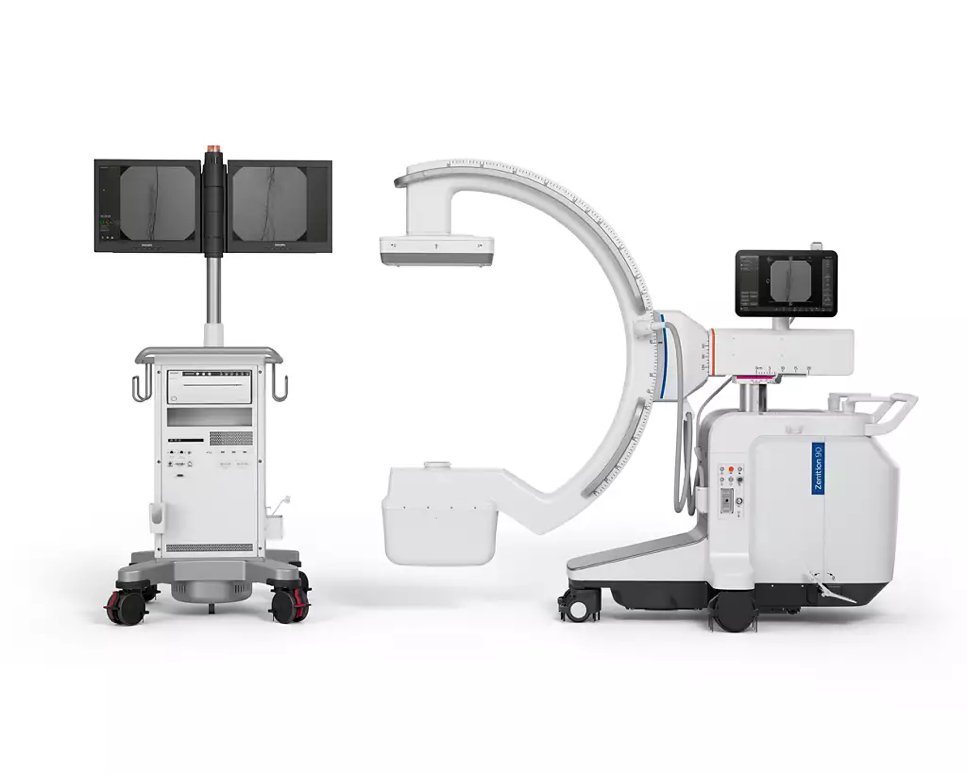
The C-arm is the piece most often undersold
It is the most frequently traded imaging unit in an ASC, and it is also the one whose value is most often guessed at. Facilities tend to price it by age, which is the weakest of the signals available. The six factors below carry far more weight, and a seller who knows them tends to get a better outcome regardless of who ends up buying the unit.
What sets a C-arm's value
Units we see most
This is what comes through most often rather than a list of what we accept. We buy outside it regularly, so a unit that is not named here is still worth sending.
Before you photograph it
Get the label on the back of the gantry and the label on the workstation in two separate shots, close enough to read. Then take the unit as it sits, the monitor cart, and anything stored with it.
Those four or five photographs answer most of what we would otherwise have to ask you, and they are the difference between a number in an hour and a number after three emails.
How a C-arm sale runs
Send the List
A spreadsheet, a photo of the room, or a walkthrough on the phone. Model and serial numbers make the number tighter and faster; we can work without them.
We Price It
Every piece is valued on its condition and on what that model is trading for right now. You get a cash number per item, or one number for the whole lot.
Offer Within 24 Hours
One number, in writing, with the reasoning behind it. No listing period, no reserve price, no waiting to see whether a buyer shows up.
We Handle the Pull
We coordinate deinstall, rigging, crating, and freight, so your team is not managing removal vendors on top of everything else.
Common questions
Do you buy C-arms that are not working?
Yes. A non-working C-arm still carries value in its parts and in refurbishment, and a fault that sounds fatal from the user side is often not. Describe the symptom rather than diagnosing it and let us look.
What if I do not know the tube hours?
Most sellers do not, and it is not a blocker. Where usage data is unavailable we price with that uncertainty in the number, which is one of the reasons a service record raises the offer.
Is a mini C-arm handled differently?
It is a separate market with its own buyers, and it is one we are active in. Extremity units from a podiatry, hand, or orthopedic practice are worth listing even when the practice assumes nobody wants them.
Do you take the C-arm without the monitor cart?
Yes, and expect the number to reflect the gap, because we have to source the missing half before the unit can be placed. If the cart exists somewhere in the building it is worth finding.
Does it matter who serviced it?
Documented service matters more than who performed it. OEM records, ISO records, and in-house biomed logs all shorten our inspection and all help the number.
How fast can you move on one unit?
A number within 24 hours. Single-unit pickups are simpler to schedule than facility buyouts, so removal generally follows quickly once terms are agreed.
Send the model and a few photographs. We will send back a number.
Working or not, with or without the cart, anywhere in the United States.